
IBM Data Analyst Course with Placement Support
IBM Data Analyst Course with Placement Support: Certification & Career Guide
What is an IBM Data Analyst Course with Placement Support?
An IBM Data Analyst Course with Placement Support is a job-focused training program that teaches you how to collect, analyze, and visualize data using tools like Excel, SQL, Python, and BI platforms.
It is designed to make you job ready by combining technical skills with career support, including resume building and interview preparation.

What is Data Analytics?
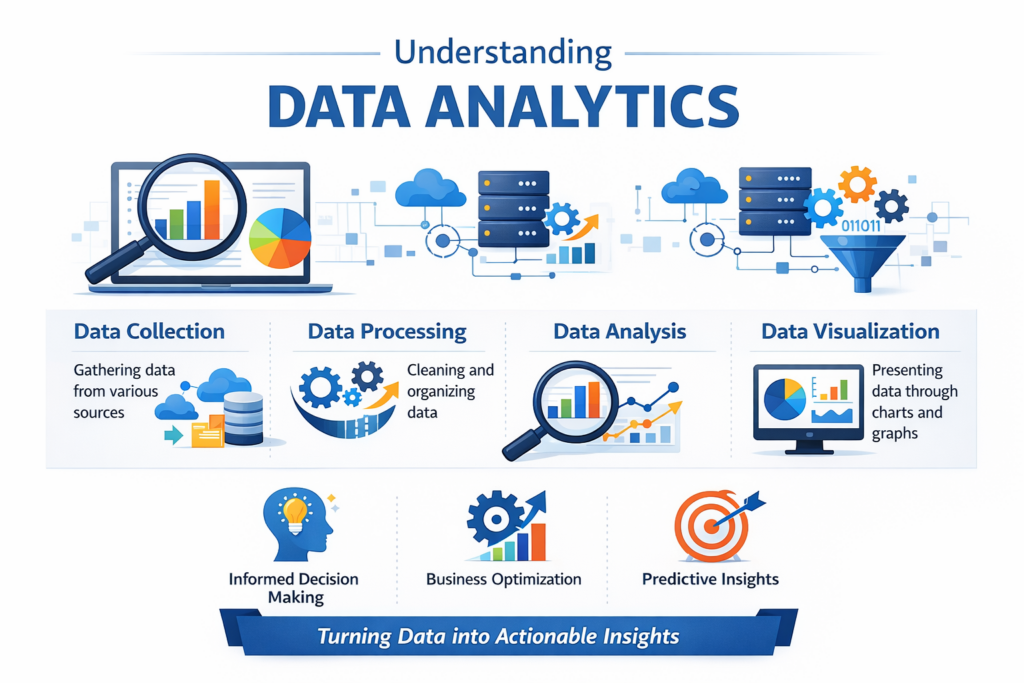
Data analytics is the process of collecting, cleaning, analyzing, and interpreting data to solve problems and support decision-making.
In simple terms, it answers questions like:
- Why are sales dropping?
- Which product is performing best?
- What do customers prefer?
A data analyst works with tools and techniques to transform raw numbers into meaningful insights that businesses can use.
For example, instead of just seeing a spreadsheet of numbers, a data analyst can identify patterns like:
- Seasonal trends in sales
- Customer behavior changes
- Performance gaps in operations
This ability to convert data into insights is what makes data analytics such a valuable skill.
It helps organizations understand patterns, trends, and make data-driven decisions.
What is an IBM Data Analyst Course with Placement Support?
An IBM Data Analyst Course with Placement Support is a structured program that teaches you how to perform data analysis using industry tools while also preparing you for job opportunities.
Unlike traditional learning, this type of course focuses on:
- Practical skills
- Real world datasets
- Job readiness
The goal of an IBM Data Analyst Course with Placement Support is not just to teach concepts, but to help you apply them in real business scenarios.
Skills You Will Develop
In today’s data driven world, building the right skill set in data analytics is essential for anyone aiming to grow in this field. This program is designed to help you develop practical, job-ready expertise that aligns with industry requirements. You will not only learn tools but also understand how to apply them effectively to solve real-world problems. These skills will help you transform raw data into meaningful insights, making you a valuable asset in any organization.
Below are the 6 key skills you will develop, along with additional capabilities that enhance your overall data analytics profile
1. Understanding Data with Excel
Excel is one of the most important tools for beginners in data analytics. You will learn how to structure, clean, and analyze datasets using functions, formulas, and pivot tables. This skill helps you quickly identify trends and patterns in data.
What you’ll gain
- Data cleaning and formatting techniques
- Use of formulas, functions, and pivot tables
- Basic data analysis and reporting
- Improved data handling efficiency
2. Working with Databases Using SQL
SQL allows you to work with large datasets stored in databases. You will learn how to write queries to extract, filter, and analyze data efficiently. This skill is essential for handling structured data in real-world scenarios.
What you’ll gain
- Writing efficient SQL queries (SELECT, JOIN, WHERE, GROUP BY)
- Understanding database structure and relationships
- Extracting and managing large datasets
- Improving data accuracy and speed of analysis
3. Performing Analysis with Python
Python is widely used for advanced data analytics. You will learn how to use powerful libraries to manipulate, analyze, and automate data processes. This skill enables you to perform deeper analysis beyond spreadsheets.
What you’ll gain
- Data manipulation using Pandas and NumPy
- Automating repetitive data tasks
- Performing statistical and trend analysis
- Handling large and complex datasets

4. Visualizing Insights
Data visualization is crucial for communicating insights effectively. You will learn how to create impactful charts, graphs, and dashboards that make data easy to understand.
What you’ll gain
- Creating clear and interactive visualizations
- Choosing the right charts for different data types
- Presenting insights in a professional way
- Improving decision-making through visual storytelling
5. Data Cleaning and Preparation
Clean data is the foundation of accurate analysis. You will learn how to prepare datasets by handling missing values, removing duplicates, and standardizing formats.
What you’ll gain
- Data preprocessing techniques
- Handling inconsistent or incomplete data
- Ensuring data quality and reliability
- Building a strong analytical workflow
6. Analytical Thinking and Problem Solving
A strong analytical mindset is what sets a data analyst apart. You will learn how to approach problems logically, interpret results, and derive meaningful conclusions from data.
What you’ll gain
- Breaking down complex problems
- Identifying patterns and insights
- Making data-driven decisions
- Developing critical thinking skills
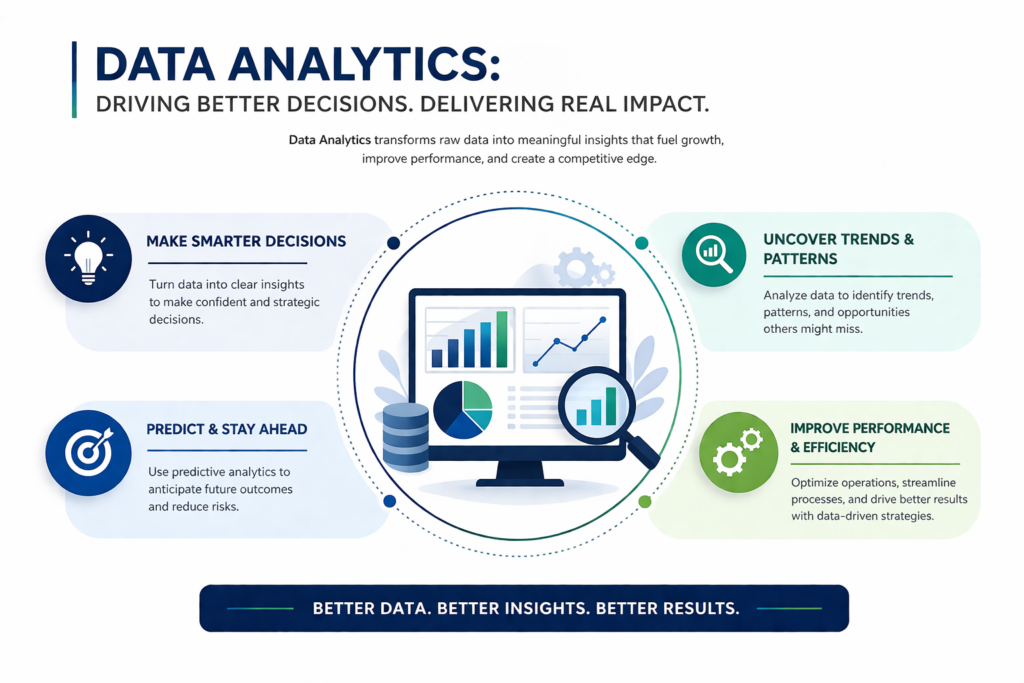
It simplifies complex datasets and helps communicate insights effectively to stakeholders.
How Placement Support Helps
Learning alone is not enough you also need guidance to enter the job market.
An IBM Data Analyst Course with Placement Support typically includes:
- Resume and portfolio building
- Interview preparation
- Career guidance
This support helps you understand what companies expect and how to present your skills effectively.
Career Opportunities in Data Analytics
After completing an IBM Data Analyst Course with Placement Support, you can explore roles such as:
- Data Analyst
- Business Analyst
- Reporting Analyst
- BI Analyst
As you gain experience, you can move into more advanced roles where you handle complex data problems and strategic decisions.
Final Answer
An IBM Data Analyst Course with Placement Support is a job-oriented training program that helps learners build practical skills in Excel, SQL, Python, and data visualization, along with career support such as resume building and interview preparation. One such structured program can be explored here career247 ,which focuses on real-world projects and job readiness. This type of course is suitable for beginners and helps improve job opportunities in data analytics by combining technical learning with practical experience.
Frequently Asked Questions
Answer:
Data analytics is the process of examining raw data to find patterns, trends, and insights. It helps businesses make informed decisions and improve performance using data-driven strategies.
Answer:
The four main types are descriptive, diagnostic, predictive, and prescriptive analytics. Each type helps in understanding past data, identifying causes, forecasting trends, and making decisions.
Answer:
A data analyst needs skills in Excel, SQL, Python, and data visualization. Analytical thinking and problem-solving abilities are also essential for interpreting data effectively.
Answer:
Popular tools include Excel, SQL, Python, and visualization tools like dashboards. These tools help in data cleaning, analysis, and presenting insights clearly.
Answer:
Data visualization involves presenting data using charts, graphs, and dashboards. It helps users easily understand complex data and identify trends quickly.
Answer:
Data cleaning is the process of removing errors, duplicates, and inconsistencies from raw data. It ensures that the data used for analysis is accurate and reliable.
Answer:
SQL is used to store, manage, and retrieve data from databases. It allows analysts to query large datasets and extract meaningful information efficiently.
Answer:
Data analysis focuses on inspecting and interpreting data, while data analytics includes the entire process from data collection to decision-making. Analytics is broader and more strategic.