
Why Python For Data Science
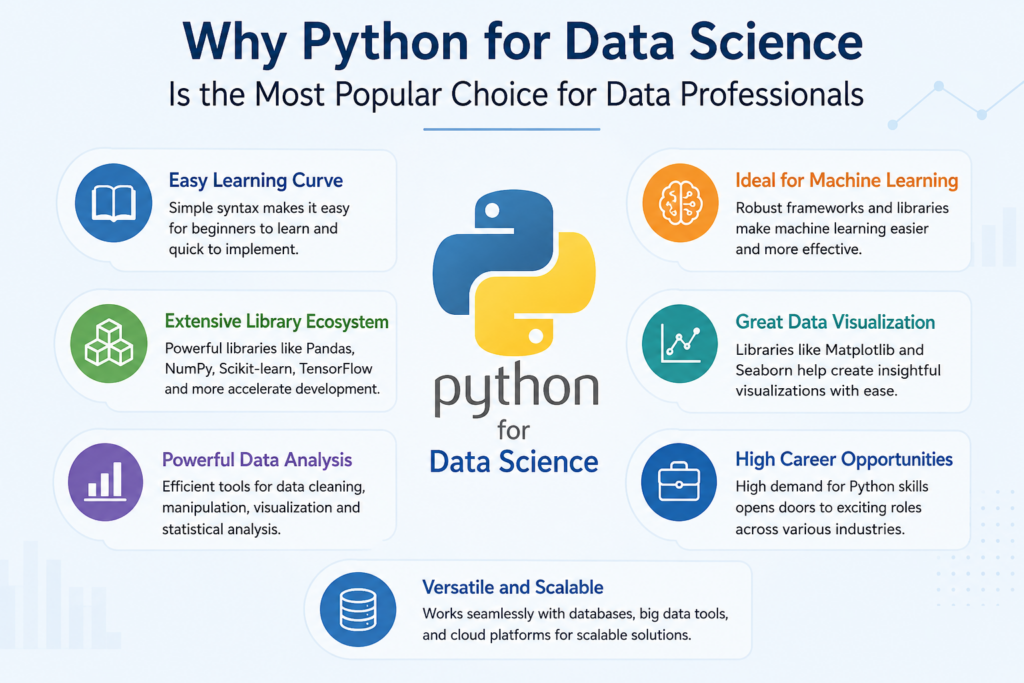
Why Python for Data Science Is the Most Popular Choice for Data Professionals
Python has become the leading programming language in the world of data analytics and artificial intelligence. From startups to multinational corporations, organizations rely on Python for Data Science to analyze data, build predictive models, and develop intelligent applications. Its simplicity, flexibility, and powerful ecosystem make it the preferred choice for both beginners and experienced professionals.
As businesses continue to generate massive amounts of information, the demand for efficient tools to process and interpret data is growing rapidly. This is one of the main reasons why Python for Data Science remains at the forefront of modern analytics and machine learning projects.

Understanding the Role of Python in Data Science
Data science involves collecting, cleaning, analyzing, and interpreting data to generate meaningful insights. Python simplifies these processes by providing a user-friendly programming environment along with a vast collection of specialized libraries.
Python has become one of the most popular programming languages in the data science industry because of its simplicity, flexibility, and extensive community support. It helps data professionals handle large datasets efficiently and perform complex analytical tasks with less coding effort.
Whether professionals are working on data visualization, statistical analysis, machine learning, or artificial intelligence, Python offers solutions that streamline development and improve productivity. Its powerful libraries and frameworks enable faster development, accurate analysis, and scalable data-driven applications.
Key areas where Python is widely used include:
- Data analysis
- Machine learning
- Artificial intelligence
- Data visualization
- Predictive analytics
- Big data processing
As businesses increasingly rely on data driven decision making, the demand for Python for Data Science continues to grow. Its versatility and ease of use make it an essential tool for both beginners and experienced data professionals.
Easy Learning Curve for Beginners
One of the biggest reasons for the popularity of Python for Data Science is its simple and readable syntax. Unlike many programming languages that require complex coding structures, Python allows users to write clear, concise, and easy to understand code.
Its beginner friendly nature makes learning programming less intimidating and helps users focus on understanding data science concepts rather than struggling with complicated syntax. This accessibility has made Python the preferred choice for students, aspiring data scientists, and professionals looking to enter the field.
This simplicity helps:
- Students learn programming faster
- Data analysts transition into data science more easily
- Businesses train employees efficiently
- Developers focus more on solving problems than writing complicated code
In addition, Python offers extensive documentation, tutorials, and community support, making it easier for beginners to find learning resources and overcome challenges. As a result, many professionals start their journey in data science with Python because it reduces the barriers to entry while providing the tools needed for long-term career growth.
- Learn Python fundamentals
- Master data analysis with Pandas
- Practice data visualization techniques
- Study machine learning concepts
- Work on real-world projects
- Build a professional portfolio
- Participate in online competitions


Extensive Library Ecosystem
One of the key reasons why Python for Data Science is so widely adopted is its extensive library ecosystem. Python offers a vast collection of pre built libraries and frameworks that simplify complex tasks, reduce development time, and improve productivity. Instead of creating functions from scratch, data professionals can leverage these powerful tools to analyze data, build models, and visualize results more efficiently.
These libraries support every stage of the data science workflow, from data preparation and statistical analysis to machine learning and artificial intelligence. This rich ecosystem allows organizations to develop scalable and cost effective data solutions while enabling data scientists to focus on solving business problems.
Popular Python Libraries for Data Science
Pandas
Pandas is one of the most widely used libraries for data manipulation and analysis. It helps professionals organize, clean, transform, and process large datasets efficiently, making data preparation much easier.
NumPy
NumPy provides powerful support for numerical computing and mathematical operations. It enables fast processing of large arrays and serves as the foundation for many advanced analytics and machine learning libraries.
Matplotlib and Seaborn
These visualization libraries help transform raw data into meaningful charts, graphs, and dashboards. They make it easier to identify trends, patterns, and insights that support data driven decision making.
Scikit learn
Scikit learn offers a wide range of machine learning algorithms for classification, regression, clustering, and predictive modeling. It is commonly used for developing and testing machine learning solutions.
TensorFlow and PyTorch
TensorFlow and PyTorch are leading frameworks for deep learning and artificial intelligence applications. They help developers build sophisticated neural networks for tasks such as image recognition, natural language processing, and predictive analytics.
The availability of these powerful tools makes Python for Data Science highly efficient, scalable, and suitable for projects ranging from basic data analysis to advanced AI-driven applications.
Strong Support for Machine Learning and AI
Machine learning has become an essential component of modern business strategies. Python supports machine learning development through robust frameworks and libraries that simplify model creation and deployment.
Benefits include:
- Faster model development
- Easy algorithm implementation
- Strong community support
- Integration with AI technologies
- Efficient experimentation and testing
Organizations implementing Python for machine learning and data science can quickly transform raw data into actionable insights.
Powerful Data Visualization Capabilities
Data visualization helps decision-makers understand complex information through charts, graphs, and dashboards. Python offers several visualization libraries that enable professionals to present findings clearly and effectively.
Advantages include:
- Better communication of insights
- Improved business reporting
- Enhanced decision making
- Easier trend identification
- Interactive dashboard creation
These capabilities make Python an important tool for analysts and business intelligence teams.
Excellent Integration with Modern Technologies
Another reason why Python for Data Science is so popular is its ability to integrate with various technologies and platforms.
Python works seamlessly with:
- Cloud computing platforms
- Big data frameworks
- Databases
- Web applications
- Artificial intelligence systems
- Business intelligence tools
This flexibility allows organizations to build complete data driven solutions without switching between multiple programming environments.
Large and Active Community Support
Python has one of the largest developer communities in the world. This active ecosystem provides extensive documentation, tutorials, forums, and open-source resources.
Community support helps professionals:
- Solve technical challenges quickly
- Access free learning resources
- Discover best practices
- Stay updated with industry trends
- Collaborate on innovative projects
The strong community behind Python for Data Science continues to drive its growth and adoption worldwide.
Career Opportunities in Python Data Science
The growing importance of data driven decision making has created a strong demand for professionals with expertise in Python for Data Science. Organizations across industries are investing heavily in data analytics, machine learning, and artificial intelligence to gain competitive advantages and improve business performance.
Because Python is one of the most widely used programming languages in the data science field, professionals who possess Python skills are highly valued by employers. From startups to multinational corporations, companies actively seek candidates who can analyze data, build predictive models, and develop intelligent solutions.
Popular career paths include:
- Data Scientist
- Data Analyst
- Machine Learning Engineer
- Business Intelligence Analyst
- AI Engineer
- Data Engineer
These roles involve working with large datasets, uncovering actionable insights, creating machine learning models, and supporting strategic business decisions. As organizations continue to expand their digital transformation initiatives, the demand for skilled data professionals is expected to grow even further.
Learning Python for Data Science can open doors to numerous high-growth career opportunities in technology, healthcare, finance, retail, manufacturing, e-commerce, and many other sectors. It provides a strong foundation for building a successful and future-ready career in the rapidly evolving world of data and artificial intelligence.
Conclusion
The growing popularity of Python for Data Science is driven by its simplicity, flexibility, extensive libraries, and powerful machine learning capabilities. It enables professionals to analyze data efficiently, create predictive models, and build intelligent applications that support business growth.
As organizations continue embracing data driven strategies, Python remains the preferred programming language for analytics, artificial intelligence, and machine learning projects. For anyone looking to enter the field of data science, learning Python is one of the smartest investments for long term career success.
Frequently Asked Questions
Answer:
Python is popular because it is easy to learn, highly versatile, and supported by a vast ecosystem of libraries. Tools like Pandas, NumPy, and Scikit-learn simplify data analysis and machine learning tasks. Its readability and strong community support make it the preferred choice for both beginners and professionals.
Answer:
Yes, Python is considered one of the best programming languages for beginners entering the field of data science. Its simple syntax allows users to focus on understanding data concepts rather than dealing with complex programming rules. Numerous online resources and tutorials also make learning easier.
Answer:
Some of the most important libraries include Pandas for data manipulation, NumPy for numerical computing, Matplotlib and Seaborn for visualization, and Scikit-learn for machine learning. Advanced projects often use TensorFlow and PyTorch for artificial intelligence and deep learning applications.
Answer:
Absolutely. Python provides powerful frameworks and libraries that support machine learning, deep learning, and artificial intelligence development. Professionals use Python to build predictive models, automate processes, and create intelligent systems across various industries.
Answer:
Learning Python for Data Science can lead to careers such as Data Scientist, Data Analyst, Machine Learning Engineer, AI Engineer, and Business Intelligence Analyst. As organizations increasingly rely on data-driven decision-making, demand for these roles continues to grow worldwide.