
Can Working Professionals Learn Data Science?
Data Science Course for Working Professionals
Data science for working professionals is becoming one of the most searched career transition topics today. With the rise of Artificial Intelligence, Machine Learning, and data driven decision making, many professionals from IT, finance, marketing, operations, and even non technical backgrounds are asking a common question: Can I learn Data Science while working full time?
The answer is yes. Working professionals can successfully learn Data Science without quitting their jobs, provided they follow a structured learning path, build practical projects, and consistently practice key tools like Python, SQL, and Machine Learning.

Why Data Science Is Ideal for Working Professionals
Data Science is one of the most flexible career fields for professionals because:
- It can be learned online
- No fixed academic background is required
- Skills can be built gradually
- Practical projects matter more than degrees
- Demand is high across industries
Many companies now value skills over formal degrees, making it easier for professionals to switch careers.

Can Working Professionals Really Learn Data Science?
Yes, working professionals can absolutely learn Data Science.
In fact, many successful Data Scientists today come from:
- Software engineering
- Banking and finance
- Business analysis
- Marketing and sales
- Operations and supply chain
- Non technical backgrounds like commerce and arts
The key is not prior experience, but consistency and structured learning.
Challenges Working Professionals Face
While learning Data Science is possible, working professionals often face certain challenges:
- Limited Time: Balancing job responsibilities and learning can be difficult.
- Lack of Structured Learning: Random tutorials often lead to confusion and slow progress.
- Difficulty in Practice: Without real world projects, concepts remain theoretical.
- Motivation Issues: Long learning journeys can reduce consistency.
- Technical Overwhelm:Python, SQL, Statistics, and Machine Learning can feel overwhelming at the beginning.
How Working Professionals Can Learn Data Science Effectively
Step 1: Start with Basics
Begin with foundational skills:
- Excel for data analysis
- Basic statistics
- SQL for data querying
Step 2: Learn Python for Data Science
Focus on:
- Data types and loops
- Pandas for data manipulation
- NumPy for numerical analysis
- Data visualization libraries
Step 3: Understand Statistics and Probability
Learn:
- Mean, median, mode
- Probability concepts
- Correlation and regression
- Distributions
Step 4: Learn Machine Learning
Start with:
- Linear regression
- Logistic regression
- Decision trees
- Clustering techniques
Step 5: Build Real World Projects
Projects help convert knowledge into skills:
- Fraud detection system
- Customer churn prediction
- Sales forecasting
- Recommendation systems
Step 6: Learn Data Visualization Tools
Tools include:
- Power BI
- Tableau
- Excel dashboards
Best Strategy for Working Professionals
- Follow a Structured Course: A structured program saves time and avoids confusion.
- Learn 1–2 Hours Daily: Consistency matters more than long study hours.
- Focus on Projects: Projects build confidence and improve employability.
- Apply Learning at Work: Try using data skills in your current job role.
- Build a Portfolio: Showcase projects on GitHub or dashboards.
Career Opportunities After Learning Data Science
Working professionals can transition into roles like:
- Data Scientist
- Data Analyst
- Business Analyst
- Machine Learning Engineer
- AI Analyst
- BI Analyst
These roles exist across:
- IT companies
- Banking & finance
- Healthcare
- E-commerce
- Consulting firms
How Long Does It Take for Working Professionals?
On average:
- Basic Data Analyst skills: 3–4 months
- Job ready Data Science skills: 6–12 months
The timeline depends on consistency and prior experience.
Benefits of Learning Data Science While Working
- Higher salary opportunities
- Career transition flexibility
- Future proof skills
- Better job security
- Growth into AI related roles
Common Mistakes to Avoid
- Jumping directly to Machine Learning
- Ignoring SQL and statistics
- Not building projects
- Learning without structure
- Switching resources too frequently
Is It Difficult for Working Professionals?
Data Science may feel challenging initially, but it is absolutely achievable with:
- Structured learning
- Practical projects
- Consistency
- Real world application
The biggest advantage working professionals have is domain knowledge, which is highly valuable in Data Science roles.
So the conclusion is….
Data science for working professionals is not only possible but also one of the most rewarding career transitions today. With structured learning, practical projects, and consistent effort, professionals can successfully move into Data Science roles without leaving their current job.
The combination of domain knowledge and Data Science skills creates a powerful career advantage in today’s AI driven world.
Start Your Data Science Journey with Career247
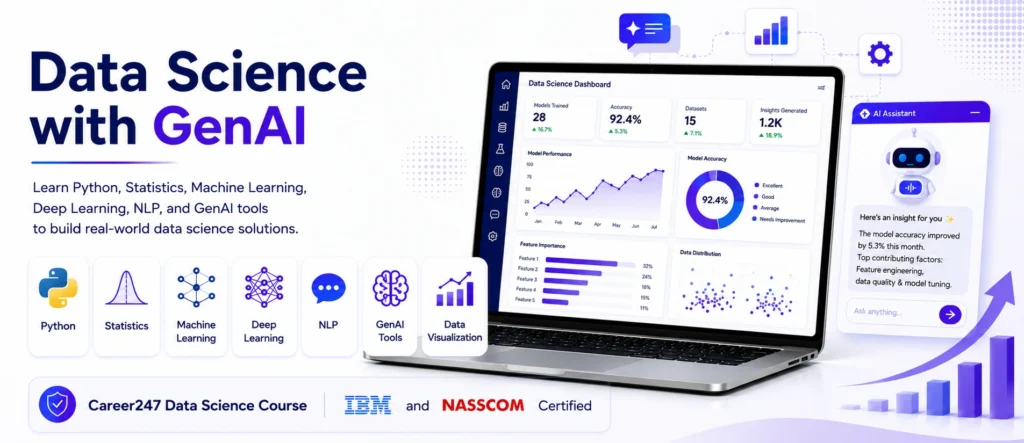
Career247’s Data Science and Machine Learning with GenAI Certification (Powered by IBM) is designed specifically for learners and working professionals.
The program includes Python, SQL, Statistics, Machine Learning, Deep Learning, NLP, and Generative AI along with real world projects like Fraud Detection, Churn Prediction, and Demand Forecasting, helping you build a job ready portfolio while you continue working.
Frequently Asked Questions
Answer:
Yes, working professionals can learn Data Science with flexible online learning, structured training, and consistent practice.
Answer:
Even 1–2 hours daily is enough if you are consistent and follow a structured learning path.
Answer:
Yes, Data Science is one of the best career switch options due to high demand and strong salary growth.
Answer:
Yes, professionals from finance, marketing, HR, and operations can also transition into Data Science.
Answer:
Yes, basic Python and SQL are required, but they can be learned gradually.