
Data Analytics for Working Professionals
Can You Learn Data Analytics While Working Full Time?
Data analytics for working professionals is becoming one of the most searched career queries in 2026. With companies across industries rapidly adopting data driven decision making, many working professionals from IT, finance, marketing, operations, HR, and even non technical backgrounds are now considering a shift into Data Analytics.
A common concern is whether it is realistically possible to learn Data Analytics while managing a full time job. The answer is yes. With structured learning, modern tools, online resources, and flexible learning programs, working professionals can successfully build a career in Data Analytics without leaving their current job.

Why Data Analytics Is a Great Career Option for Working Professionals
Data Analytics is one of the most flexible and career friendly fields for professionals who want to upskill or switch careers.
Main reasons include:
- High demand across industries
- Flexible learning options (online and self paced)
- No strict requirement for a computer science degree
- Strong salary growth potential
- Opportunities across IT, banking, marketing, healthcare, and e-commerce
Most importantly, Data Analytics focuses on practical skills that can be learned progressively.
Can Working Professionals Learn Data Analytics?
Yes, working professionals can learn Data Analytics effectively, even with limited time.
Unlike traditional degrees, Data Analytics can be learned through:
- Online certification programs
- Self paced courses
- Weekend learning schedules
- Project based training
- Industry focused bootcamps
Many successful Data Analysts today come from non technical and non CS backgrounds such as commerce, business administration, and arts.
The key is consistency, structured learning, and hands on practice.

How Working Professionals Can Learn Data Analytics Step by Step
Step 1: Learn Excel for Data Analysis
Excel is the foundation of Data Analytics.
You should focus on:
- Data cleaning
- Pivot tables
- Charts and dashboards
- Basic formulas
- Data sorting and filtering
Excel helps you understand basic data handling without coding.
Step 2: Learn SQL for Data Extraction
SQL is essential for working with databases.
Main skills include:
- SELECT queries
- JOIN operations
- GROUP BY and aggregation
- Filtering data
- Basic database concepts
SQL is widely used in almost every Data Analyst role.
Step 3: Learn Data Visualization Tools
Visualization tools help convert data into insights.
Popular tools include:
- Power BI
- Tableau
- Google Looker Studio
You will learn how to build:
- Dashboards
- KPI reports
- Business insights reports
Step 4: Learn Basic Statistics
Statistics helps you understand data patterns.
Focus on:
- Mean, median, mode
- Correlation
- Probability basics
- Trend analysis
- Data distribution
Step 5: Learn Python
Python is useful for advanced analytics.
Important libraries:
- Pandas
- NumPy
- Matplotlib
- Seaborn
Python helps in automation and advanced analysis.
Step 6: Work on Real world Projects
Projects help you build a strong portfolio.
Examples include:
- Sales dashboard
- Customer churn analysis
- Marketing performance analysis
- Financial reporting dashboard
Projects are critical for job readiness.
How Much Time Do Working Professionals Need?
On average:
- 2–3 hours per day is enough
- 4–6 months for basic job readiness
- 6–9 months for strong career transition
Weekend learners can also progress steadily with consistency.
Challenges Working Professionals Face
- Time Management: Balancing job and learning is difficult but manageable with a fixed schedule.
- Lack of Guidance: Many learners struggle due to unstructured content online.
- Practical Experience Gap: Theory alone is not enough; hands on projects are essential.
- Motivation Drop: Long learning journeys require discipline and consistency.
How to Overcome These Challenges
- Follow a structured learning roadmap
- Practice daily, even for short durations
- Work on real world datasets
- Join guided certification programs
- Focus on project based learning
- Track progress weekly
Career Opportunities After Learning Data Analytics
Working professionals can transition into roles such as:
- Data Analyst
- Business Analyst
- Reporting Analyst
- Product Analyst
- BI Analyst
- Operations Analyst
These roles exist across industries including IT, banking, healthcare, retail, and consulting.
Why Data Analytics Is Ideal for Career Switchers
Data Analytics is one of the most beginner friendly tech careers because:
- No advanced coding required initially
- Skills are highly practical
- Real world problem solving is prioritized
- Entry level roles are widely available
- Career growth is strong and structured
This makes it ideal for working professionals looking for a stable career transition.
Conclusion is that….
Data analytics for working professionals is not only possible but also one of the most practical and high growth career transitions today. With flexible learning options, structured roadmaps, and hands on projects, working professionals can successfully build a strong career in Data Analytics while continuing their current job.
The key to success is consistency, guided learning, and real world practice. With the right approach, transitioning into a Data Analyst role is an achievable and rewarding career move.
Learn Data Analytics with Career247
If you are a working professional looking to transition into a Data Analytics career, structured learning becomes extremely important.
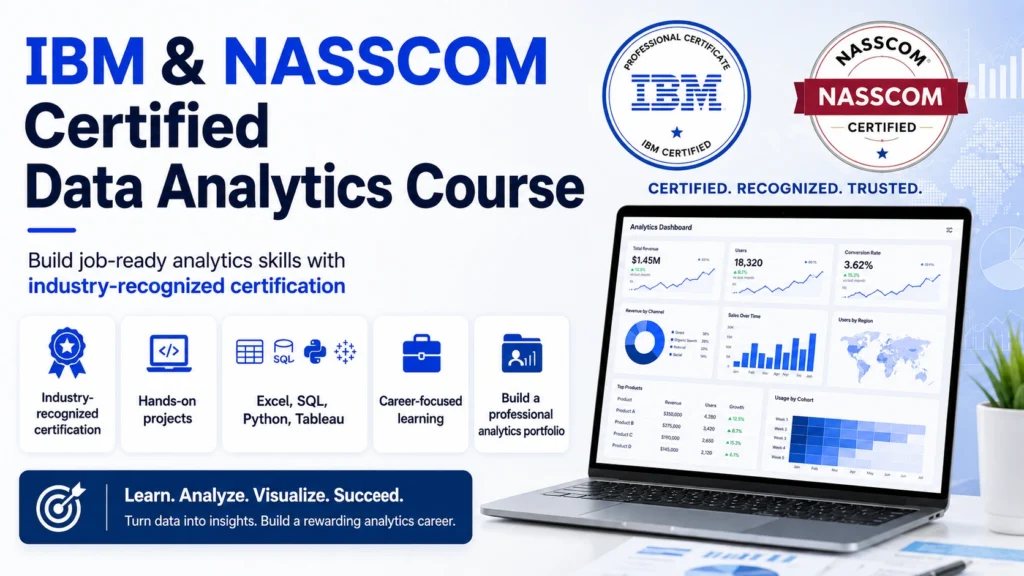
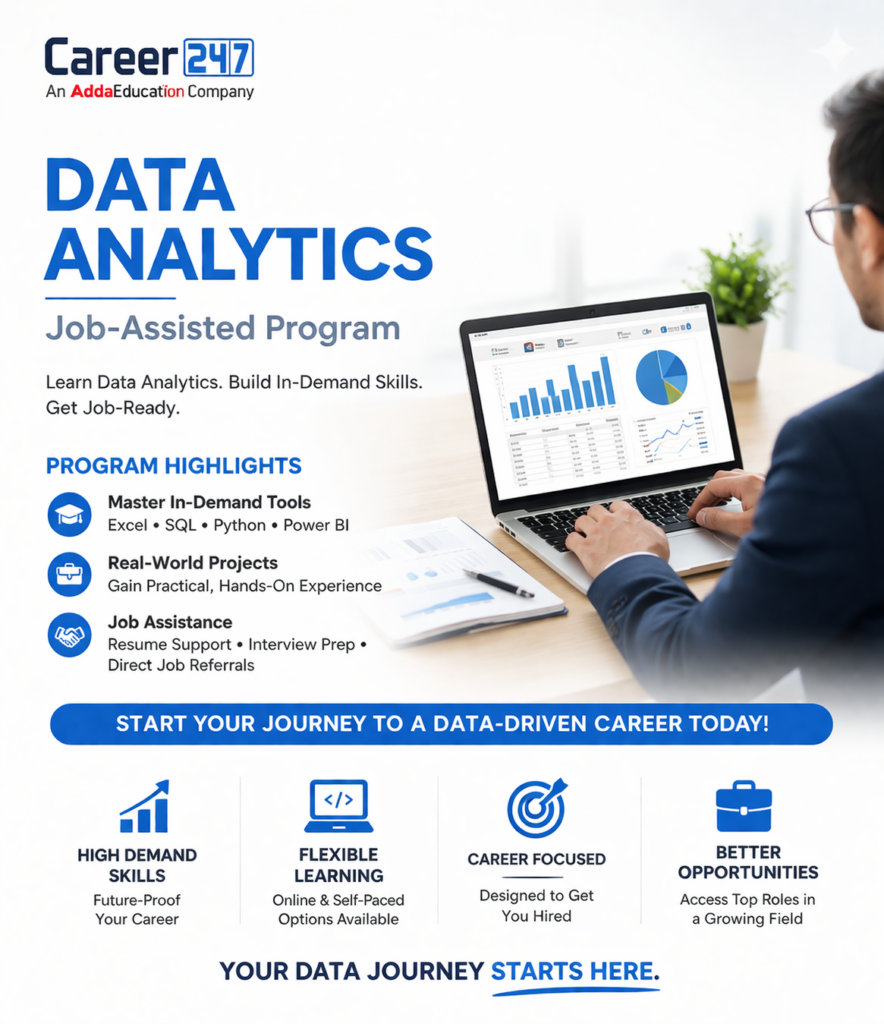
Career247’s Data Analytics Certification Powered by IBM and NASSCOM is designed specifically for beginners and working professionals. The program focuses on practical, job oriented skills including Excel, SQL, Power BI, Tableau, Python, Statistics, Business Intelligence, and Generative AI.
With real world projects such as KPI dashboards, sales analysis, customer behavior tracking, and business reporting systems, learners gain hands on experience that helps bridge the gap between theory and industry requirements.
Frequently Asked Questions
Answer:
Yes, working professionals can learn Data Analytics through online courses, certification programs, and structured self paced learning without leaving their job.
Answer:
No, Data Analytics is manageable with a structured learning plan. Most concepts are practical and can be learned step by step with consistent practice.
Answer:
On average, working professionals need 4–6 months for basic proficiency and 6–9 months for job ready skills.
Answer:
Yes, many professionals successfully transition into Data Analytics roles through project based learning and certification programs.
Answer:
Main skills include Excel, SQL, Power BI, Tableau, basic statistics, and optional Python for advanced analytics.