
Best Data Science Course in 2026
How to Choose the Right Program for Your Career
Best Data Science Course is one of the most searched phrases among students and professionals looking to build a career in analytics, machine learning, and artificial intelligence. As businesses across finance, healthcare, e-commerce, consulting, and technology continue investing heavily in data driven decision making, demand for skilled data professionals remains strong.
The challenge is not finding a course, it is finding one that actually prepares you for the job. Many programs advertise certifications and quick placements, but employers typically look for practical skills in Python, SQL, statistics, machine learning, data visualization, and real world problem solving.
So how do you identify a Data Science course that is truly worth your time and investment? The answer lies in evaluating the curriculum, projects, mentorship, and career outcomes, not just the certificate.

Why Are Data Science Courses So Popular?
Businesses generate massive amounts of data every day.
They need professionals who can:
- Analyze data
- Build predictive models
- Apply machine learning
- Create business insights
- Support AI driven decision making
This demand has made Data Science one of the most attractive career paths for students, graduates, and working professionals.
What Should be a Best Data Science Course Include?
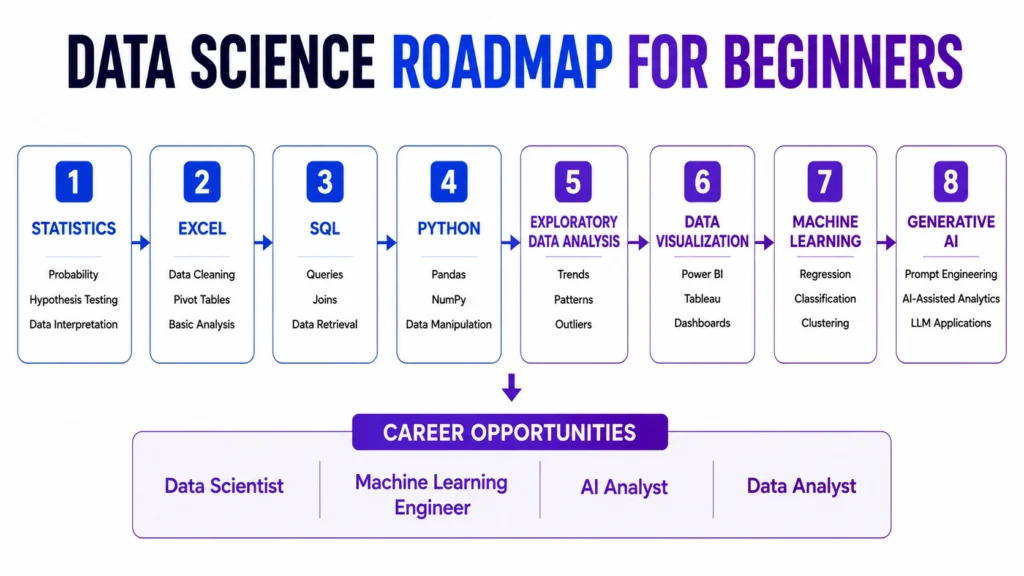
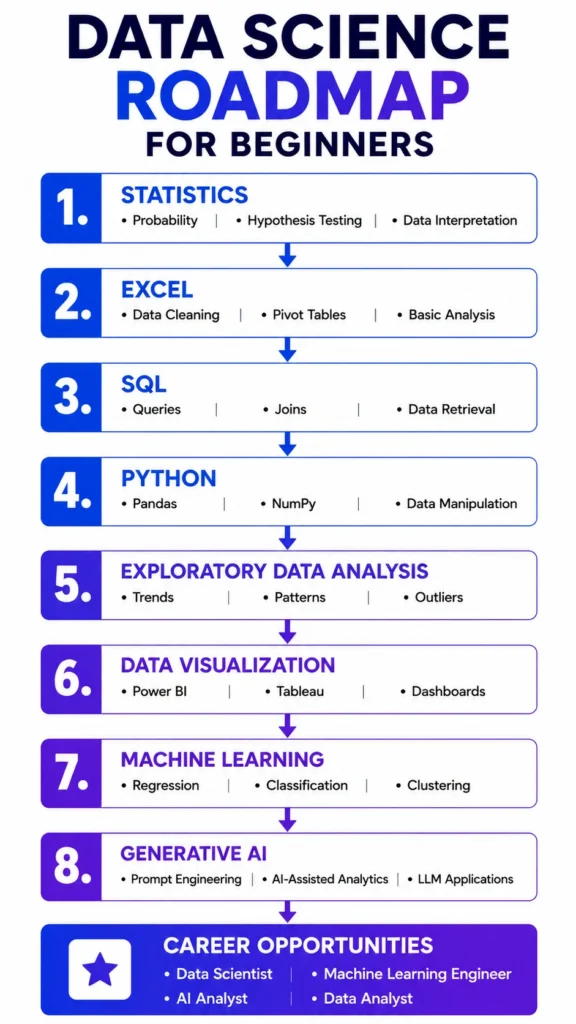
1. Statistics and Probability
The foundation of Data Science.
Topics should include:
- Descriptive Statistics
- Probability
- Hypothesis Testing
- Correlation
- Regression
Without statistics, understanding machine learning becomes difficult.
2. Python Programming
Python remains the most widely used language in Data Science.
Key libraries:
- Pandas
- NumPy
- Matplotlib
- Scikit-Learn
Python is used for data analysis, automation, machine learning, and AI applications.
3. SQL and Databases
Most business data lives inside databases.
A strong course should teach:
- Data Retrieval
- Joins
- Aggregations
- Query Optimization
SQL remains one of the most requested skills in Data Science job descriptions.
4. Machine Learning
A quality course should cover:
- Supervised Learning
- Unsupervised Learning
- Classification
- Regression
- Model Evaluation
Machine Learning is what transforms Data Science from reporting into prediction.
5. Data Visualization
Insights matter only when people understand them. Visualization helps translate complex data into business decisions.
Popular tools include:
- Power BI
- Tableau
- Python Visualization Libraries
6. Generative AI and Prompt Engineering
Modern Data Science is increasingly integrating Generative AI.
Professionals now use AI tools for:
- Data exploration
- Code generation
- Documentation
- Reporting
- Insight generation
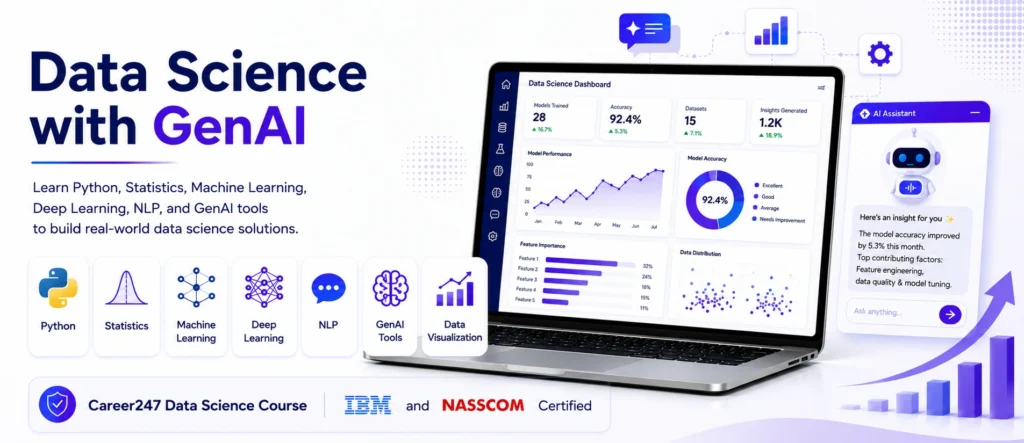
This is why Data Science with GenAI is becoming a highly relevant skill combination
How to Evaluate a Best Data Science Course
Before enrolling, ask these questions:
Does It Include Real Projects?
- Projects are often more valuable than certificates alone.
- Employers want evidence that you can solve real business problems. Community discussions repeatedly highlight project work as a major differentiator during hiring.
Is the Curriculum Industry Relevant?
Look for:
- Python
- SQL
- Statistics
- Machine Learning
- Visualization
- Generative AI
Does It Teach End to End Workflows?
You should learn how data moves from:
Data Collection → Cleaning → Analysis → Modeling → Visualization → Business Decisions
Does It Offer Career Support?
Helpful features include:
- Resume Guidance
- Portfolio Reviews
- Interview Preparation
- Mock Interviews
Who Should Enroll in a Data Science Course?
A Data Science course is suitable for:
- Students
- Fresh Graduates
- Working Professionals
- Career Switchers
- Data Analysts Moving Into Machine Learning
- Non Technical Learners Interested in AI and Data
Many successful learners come from Commerce, Management, Economics, and other non-engineering backgrounds.
Why Structured Learning Often Works Better Than Self Learning
Self learning offers flexibility. However, many learners struggle with:
- Information overload
- Lack of direction
- No project guidance
- No mentorship
- No interview preparation
A structured program provides a roadmap and helps learners focus on the skills employers actually value. Community discussions frequently point to projects, mentorship, and guided learning as key advantages over consuming isolated content.
So the Conclusion is….
Choosing the best Data Science course is not about finding the biggest certificate or the most popular advertisement. The real goal is finding a program that teaches practical skills, real world problem solving, and industry relevant tools.
The strongest programs combine Statistics, Python, SQL, Machine Learning, Data Visualization, Generative AI, and project based learning into a structured roadmap that prepares learners for modern data roles.
Build Job Ready Data Science Skills with Career247
Career247’s Data Science and Machine Learning with GenAI Certification Powered by IBM is designed to help learners develop practical, industry relevant skills through a structured curriculum.
The program covers Statistics, Python, SQL, Machine Learning, Data Visualization, Prompt Engineering, Generative AI, and real world projects that mirror business challenges.
By combining technical foundations with hands on application, learners gain exposure to the tools and workflows used by today’s Data Scientists, Machine Learning Engineers, and AI professionals.
Frequently Asked Questions
Answer:
The best course should cover Python, SQL, Statistics, Machine Learning, Data Visualization, Generative AI, and real world projects in a structured manner.
Answer:
Certificates can help, but employers typically place greater emphasis on practical projects, portfolios, and problem solving ability.
Answer:
Yes. With a structured learning path, students from Commerce, Arts, Economics, and Management backgrounds can successfully transition into Data Science.
Answer:
Increasingly, yes. Many professionals use Generative AI for coding assistance, reporting, analysis, and workflow automation.
Answer:
The timeline depends on prior experience, but most learners require several months of consistent learning, project work, and practice to build job ready skills.


Login/Signup to comment